2019 Calendar with Graphic Elements
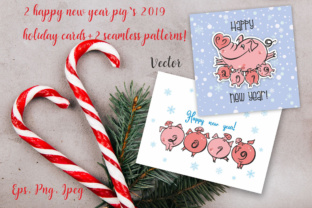
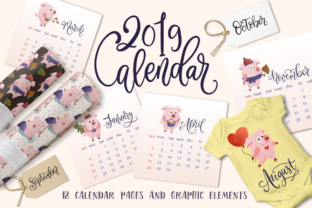
Starting the new year with intention means more than just flipping a page—it means choosing tools that support clarity, creativity, and consistency. The 2019 Calendar with Graphic Elements delivers exactly that: a thoughtfully assembled digital resource built around charm, flexibility, and practical utility. At its heart is a set of 12 square calendar pages—each designed with cheerful, hand-drawn cartoon pigs—plus matching A4 versions, all delivered in EPS 10, JPG, and PNG formats with transparent backgrounds. That transparency isn’t just convenient; it’s essential for layering into presentations, social media posts, or branded print materials without extra editing.
Why designers and small teams reach for this calendar pack
For freelancers managing multiple clients or educators planning classroom activities, time visibility matters—but so does visual cohesion. This 2019 Calendar with Graphic Elements gives you ready-to-use layouts that already carry personality and polish. You’re not starting from scratch with fonts, spacing, or color harmony. Instead, you get 13 square and 13 A4 calendar pages (including a cover or “Year at a Glance” page), each cleanly structured and visually unified by the same playful pig motif. That consistency helps reinforce your brand voice—whether you're a boutique stationery shop curating seasonal collections or a wellness coach launching a New Year challenge.
The inclusion of 12 month name lettering pieces (in EPS, JPG, and PNG) adds another layer of adaptability. Need to reposition “March” over a custom background photo? Swap “July” into an Instagram story template? Adjust kerning in Illustrator? All possible—without redrawing or licensing concerns. These aren’t generic fonts; they’re original, hand-crafted letterforms that match the pig illustrations’ warmth and rhythm.
More than a calendar: a design toolkit for real workflows
What makes this pack especially valuable isn’t just the calendars—it’s how the assets work together. The 13 square and 13 A4 cartoon pig clip arts (also in EPS, JPG, and PNG with transparency) let you extend the theme beyond January–December grids. Use them as bullet points in client proposals, as icons in workshop handouts, or as recurring motifs in email newsletter headers. Because each pig illustration is isolated and scalable, resizing for web or print introduces no quality loss—critical when you’re preparing both social thumbnails and letterpress business cards.
Then there are the 10 seamless patterns—each built from hand-drawn, color-rich pig elements. These aren’t tiled repeats that look mechanical. They breathe like hand-printed fabric: subtle variations in line weight, gentle overlaps, soft edges. Designers use them for notebook covers, packaging liners, or website section dividers. Educators embed them into printable behavior charts or reward certificates. Small business owners apply them to gift tags or product labels—adding tactile appeal without hiring an illustrator.
Who benefits most—and where it fits best
This 2019 Calendar with Graphic Elements serves creators who value efficiency *and* authenticity. It’s ideal for:
- Bloggers and content planners building themed editorial calendars—pairing monthly pig illustrations with topic clusters or campaign milestones;
- Teachers and homeschoolers designing classroom walls or student goal trackers where friendliness supports engagement;
- Small retailers creating in-store signage, loyalty program graphics, or limited-edition merchandise;
- Nonprofit communicators developing accessible, joyful materials for family-facing programs;
- Freelance designers expanding their asset library for quick-turnaround client projects—especially those needing cohesive, lighthearted visuals.
It’s less suited for users needing photorealistic or ultra-minimalist aesthetics—or those whose work requires strict adherence to corporate brand guidelines with fixed color palettes and typefaces. If your workflow relies heavily on automated layout tools (like Canva templates that don’t accept EPS), you’ll get more mileage from the JPG and PNG files—but may miss out on vector scalability for large-format printing. Also note: while the pig motif is universally approachable, it may not align with industries prioritizing austerity or formality (e.g., legal firms or financial advisors).
Practical tips for getting the most out of your files
Start by exploring the EPS files in Adobe Illustrator or Affinity Designer—these give you full control over colors, strokes, and grouping. Change a pig’s blush tone to match your brand’s secondary palette, or recolor month lettering to improve contrast against dark backgrounds. For quick edits in Photoshop or free tools like Photopea, lean on the high-res PNGs with transparency—they paste cleanly into layered compositions.
When repurposing the seamless patterns, try scaling them down to 40–60% for subtle texture in digital layouts, or enlarge them for fabric-print mockups. And don’t overlook the A4 calendar pages as presentation slide bases—add your quarterly goals in a clean sans-serif font, and you’ve got a polished internal planning deck in under five minutes.
One often-overlooked strength? The dual-size structure. Square calendars suit Instagram carousels, Pinterest pins, or desktop wallpapers; A4 versions work seamlessly for printed planners, workshop handouts, or laminated office displays. Having both eliminates the guesswork of cropping or stretching—saving time across platforms.
A thoughtful foundation—not just decoration
A beautiful calendar to start the new year isn’t about prettiness alone. It’s about reducing friction between idea and execution. With the 2019 Calendar with Graphic Elements, you gain a reliable, expressive foundation—one that respects your time, supports your voice, and adapts to real-world needs. Whether you’re mapping a year of creative experiments, organizing volunteer schedules, or designing a children’s activity series, these assets help keep focus where it belongs: on meaning, connection, and forward motion—not on rebuilding basic visuals from zero.
That’s the quiet advantage of well-considered design resources: they don’t shout. They simply make good work easier to do—and more joyful to share.